

Often when I find this mushroom, which is commonly known as the lobster, it is partially buried in leaf debris and dirt and what-have-you. The Hypomyces contorts the host mushroom when it attacks, sometimes twisting it and creating holes. As well, the host may not have been in perfect condition when attacked. The Hypomyces firms up the flesh of the host, paints it lobster shell red-orange and transforms it into a tasty mushroom.
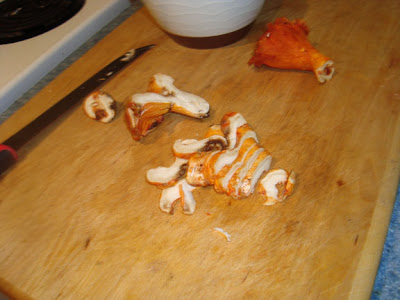
I start by washing these mushrooms. Water doesn't seem to have any ill effect on flavour or texture. Brush out as mush debris and dirt and grit as possible. Cut out anything that is deep red, spongy, brown or otherwise unappetizing. Then slice the mushroom into thin slices. I usually make them an around eighth inch thick.
Finally, simply cut away anything that looks dirty or buggy or spongy from the slices, and you're ready to go.
I like to dry these for use later. I use a food dehydrator for this, then put the dried lobsters in mason jars. Later, they reconstitute very well, retaining the good firm texture. When you cook with these mushrooms, be sure to cook them well, as you would with any wild mushroom. When eating any mushroom for the first time, eat just a little to be sure your body tolerates it OK.